Showing posts with label Rating: 5/5. Show all posts

Sunday, 9 February 2014

I Too Had a Dream by Verghese Kurien


Title: I Too Had a Dream
Author: Verghese Kurien
Number of Pages: 250
Cover Price: Rs. 295
Rating: 5/5


Dr Verghese Kurien (1921-2012) born in Calicut, Kerala graduated in science and engineering from Madras University and Michigan State University, USA, respectively.
He began his career in dairying at the government's creamery in Anand, Gujarat, later joining the Kaira District Cooperative Milk Producer's Union Limited (now Amul). As chairman of the National Dairy Development Board, he implemented 'Operation Flood'.

He has received countless awards, including the Ramon Magsaysay Award (1963), Wateler Peace Prize (1986), World Food Prize (1989) Padma Shri (1965), Padma Bhushan (1966) and Padma Vibhushan (1999). 

About this book:

This book is the autobiography of Verghese Kurien - with emphasis on how he built the Amul Brand. The book begins with the background of Dr Kurien followed by several incidents validating Kurien’s point that with every challenge comes an opportunity.

After finishing his Master of Science from Michigan State University, which was sponsored by Indian government, he was supposed to serve the government in return. Due to this, he was posted to a small, unknown village called 'Anand' (in Gujrat) accidentally and was given with the responsibility of the government owned milk production department over there. As he was looking for a new job in Delhi, in the mean time, he met with a person, Thirubhuvan Das Patel and started taking care of the co-operative milk society of Anand. This incident changed his life and carrier as along with villagers and Thirubhuvan Das, Kurien decided to stay in Anand and started building the co-operative society from the scratch. This was just the starting of a long effort which after 35 years, made India as number one milk producer. The book describes various problems faced by him from private business houses, government, MNC's etc and how he fought against all these. Again later, after achieving success by building 'Amul', he went on by executing 'The While Revolution' which spread Amul across the country.

Below are some lines from the book:
If you are always honest to yourself, it does not take much effort in always being honest with others.
When you work merely for your own profit, the pleasure is transitory; but if you work for others, there is deeper sense of fulfillment and if things are handled well, the money, too, is more than adequate.
We Indians are an extremely intelligent people but we can progress as a nation only when we learn the secret of unleashing this positive power of the people. Whenever this happens it disturbs a lot of people - because they know that a giant is waking up.
This is such an inspirational book which passes the message that everything is possible if one believes in one’s self.  Very highly recommended book - a must read!


Friday, 14 June 2013

Old Path White Clouds by Thich Nhat Hanh


Title: Old Path White Clouds
Author: Thich Nhat Hanh
Number of Pages: 599
Cover Price: Rs. 395
Rating: 5/5

Get this from Flipkart.com (298)


Thich Nhat Hanh (born in 1926) is a Vietnamese Buddhist Monk. His life long efforts to generate peace and reconciliation moved Martin Luther King Jr. to nominate him for the Nobel Peace Prize in 1967.
He is the founder of Van Hanh Buddhist University in Saigon, and taught at Columbia University. He is the author of Being Peace, Under the Banyan Tree and other 85 books.

About this book:

Old Path White Clouds presents the life and teachings of Gautama Buddha. Drawn directly from 24 Pali, Sanskrit and Chinese sources, and retold by Thich Nhat Hanh in his inimitably beautiful style, this book traces the Buddha's life slowly and gently over the course of 80 years, partly through the eyes of Svasti, the buffalo boy, and partly through the eyes of the Buddha himself.

Old Path White Clouds is a classic of religious literature.

Below are some lines from the book:
Learn from the Earth. Whether people spread pure and fragrant flowers, perfume, or fresh milk on it, or discard filthy and foul smelling feces, urine, blood, mucus and spit on it, the Earth receives it all equally without clinging or aversion. When pleasant or unpleasant thoughts arise, don't let them entangle or enslave you.
Learn from water. When people wash dirty things in it, the water is not sad or disdainful. Learn from fire. Fire burns all things without discrimination  It is not ashamed to burn impure substances. Learn from air. The air carries all fragrances whether sweet or foul.
The teaching is like a raft that carries you to the other shore. The raft is needed but raft is not the other shore. An intelligent person would not carry the raft around on his head after making across to the other shore. Do not become caught in the teaching. You must be able to let it go.
This is a beautiful book having poetic description. The book gives excellent introduction to the Buddha. It may seems to be voluminous but still you want more of it.
A must read for every person.


Tuesday, 11 December 2012

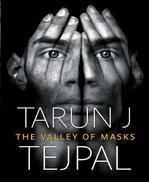
The Valley of Masks by Tarun J. Tejpal


Title: The Valley Of Masks
Author: Tarun J Tejpal
Number of Pages: 488
Cover Price: 499
Rating: 5/5

Get this from Flipkart.com (Rs. 374)


Tarun J Tejpal born in 1963 is journalist and a novelist  He has been editor with India Today. After 2000, he started Tehelka news organization which now has a very good global reputation.

About this Book:

First of all this is not at all an easy read. It took lots of seating for me to complete the book. Almost after every page, I had to pause for a bit to further understand depth of each line written.

There are some books that we would enjoy reading and some books are meant to convey some message. 'The Valley of Masks' is none of these categories.

Even though as compared to other books, I have read before, pace for this was almost half. But I always wanted that this book should never end.

The Valley of Masks is about indifference. The book is about an organization that teaches violent perfection to young children. 'Aum' is leader of this path - where equality is placed before everything else – so much so that they have the same face – a mask that is fitted to their face once they turn sixteen and hence the name 'Valley Of Masks'.

It is a dark book - the more one reads, the more one is scared. One may would have read hundreds of books but I am dead sure, no one would have read anything like this.

These are some initial lines from the book, itself telling the complexity of the story:
It is not a long story. Some men would tell it in the time it takes to drink a glass of bitter sweet Ferment. And then there are those who would tell it in such detail that barrels would be drained dry and they would not arrive at its end. I am in between – too confused to be too short or too long. I was not always so. Once I was a man of opinion and will and purpose. Men turned to me for fixity when their hearts and minds wavered. Once.
In the world out there, men are neither free nor equal nor moral. They are driven by shallow impulses which made them dangerously selfish and dishonest. The seed of this inferno is the need to possess. The seed of this inferno is the word 'my'.
Looks are the greatest curse of life. A decoy and distraction. They are the crucial test set by divinity that all men fail. In the garden of looks bloom envy, ego, anxiety, vanity, covetousness, bitterness, lust and despair. In the garden of looks bloom the seed that first destroy the brotherhood. 
Even though its a hard read, everyone should read this book to know exactly that the extant of literature is far more beyond IIT Campus love stories and other such stuffs...


Saturday, 1 December 2012

The Monk, the Moor and Moses Ben Jalloun by Saeed Akhtar Mirza


Title: The Monk, the Moor & Moses Ben Jalloun
Author: Saeed Akhtar Mirza
Number of Pages: 256
Cover Price: Rs. 450
Rating: 5/5

Get this from Flipkart.com (428)


Saeed Akhtar Mirza born in 1943 is writer and director of hindi films and television serials. He has directed movies such as Arvind Desai Ki Ajeeb Dastaan (1978), Albert Pinto Ko Gussa Kyon Aata Hai? (1980), Mohan Joshi Haazir Ho (1984), Salim Langde Pe Mat Ro (1989) and Naseem (1995). Also, he is director of TV serials Nukkad (1986) and Intezaar (1988). He lives in Mumbai.
His first novel was Ammi: Letter to a Democratic Mother. The Monk, the Moor and Moses Ben Jalloun is his second novel.

About this Book:

The book is about the history we hardly knows. The history about people from middle-east region and islamic civilization, their contribution in the fields of philosophy, medicine, maths, astronomy, chemistry, literature. We give credit to the people from west about all these subjects. But Mirza has has uncovered the history describing its roots in ancient Islamic civilization. There are three main stories in the book:

1) First story is about four students in an American university of English Literature - an Indian, an African, an American and an Arab. They start discovering the thurth on their own: not just because they need to know they see how the past affects their own lives in very real ways.

2) Second is the story about conversations between a Christian monk, an Arab, and the Jewish scholar Moses ben Jalloun as they translate Arabic texts into European languages in 12th century.

3) Third story a girl who is a student of the scholar Al Beruni.

The author narrates these three parallel stories from different period of times and conveys the message that people from islamic civilization have achieved much more than just shooting each other or just being oil sheikhs and actually were way ahead of other civilisations, particularly the West, which destroyed and covered up their contribution.

He has described the contribution of scholars such as Abu Rehan al-Biruni, Mohammad bin Musa al-Khwarizmi, Ibn Sina, Ibn al-Hytham and many more.

Below are some lines from the book:
"The duty of a man who investigates the writings of scientists, if learning the truth is his goal, is to make himself an enemy of all that he reads and, applying his mind to the core and margins of its contents, attack it from all sides. He should also suspect himself as he performs his critical examination of it, so that he may avoid falling into either prejudice or leniency." 
"'O pious one', said the laconic iconoclast, Let me sit and drink wine in the mosque. Or could you show me a place where God doesn't exits ?"

The book is must read for everyone not just because it has been narrated very beautifully but also to understand the actual history and to pass it on to other people so that the knowledge of this history continues......


Sunday, 14 October 2012

The Difficulty of Being Good by Gurcharan Das


Title: The Difficulty Of Being Good, On The Subtle Art Of Dharma
Author: Gurcharan Das
Number of Pages: 488
Cover Price: Rs. 699
Rating: 5/5

Get this from Flipkart.com (Rs. 524)


Gurcharan Das graduated from Harvard University and was the CEO and then VP for Procter & Gamble India between 1985 and 1992. We worked in various MNCs across different countries. Later he took retirement at around 50 to become a full time writer and started writing columns for various newspapers.

About this Book:

Before writing this book, Gurcharan Das spent around 6 years continuously with 'The Mahabharata'. He studied each character, the problems they faced and tried to map those issues to our present lives.


This book is not just restricted to the story of Mahabharata but also a very good analysis of its each character.

The book is divided into 10 chapters, each corresponding to a different character (Duryodhana, Draupadi, Yudhishtira, Arjuna, Bhishma, Krishna...). In each chapter, he took examples from present world and showed how the incidents happened thousands of years ago are being repeated even in this modern world. Below are some lines from the book:
"Assume, too, that life is a dice game, governed by rules known to be deceptive, in which the least experienced, least adequate player is nevertheless pushed to the point of staking everything he has including, in the end, himself, with the certainty of losing . . .Assume a world in which each of the players in this game must be seen to die in most cases violently and unfairly; in which, moreover, the poles of life and death are present in every move with the death pole always strangely privileged, cognitively and metaphysically, so that death is, in effect, the only possible outcome of the game. In such a world, one mostly fights for time." 
"To save the family, abandon an individual. To save the village,
abandon a family; to save the country, abandon a village. To save
the soul, abandon the earth."
Examples of Ambani brothers co-related with Duryodhana. And later how their mother (like Dhritarashtra) split the family as happened in Mahabharata.
Explanation of the scandal in 2009 by B. Ramalinga Raju is again provided through Mahabharata. How and why should a person of such talent, achievement, who lacked nothing in life, turn to crime?
You will find lots of such examples which helps in distinguishing between right and wrong.

I enjoyed this a lot and would strongly recommend this for everyone. After reading this you will come to know the hard work done behind this and investing Rs 600 would surely return much heavier knowledge... :)

A must read !!